


Hello and welcome to The Valleys Lead.
Happy St David’s Day from us to you! Are you eating a Welsh cake? Or maybe a slice of Bara Brith?
Thanks for joining us again this week. If you’re enjoying and/or finding these newsletters helpful and informative, we’d love you to keep joining us every week. We are hoping to continue to build, and you would be doing local journalism a massive favour by sharing these newsletters on your social media feeds, or just sending them to people you think might be interested. And if you haven’t subscribed yet, please do so below - it’s free!
This week, we’ve got a story to tell you about the links between Ukrainian and Welsh miners. Today is a day of celebration in Wales, but this week hasn’t been a celebration in Ukraine. Instead, this week marks four years since Russia’s full-scale invasion of Ukraine. As we celebrate today, let’s also remember those in Ukraine exhausted by an oppressor in a war that feels never-ending.
If you want to support The Valleys Lead, it’s free to subscribe. Paid subscribers get a bit more for only £4.99 a month, or £49 a year - but we’ve got a St David’s Day treat for you as we now have 30% off if you subscribe during March. More details below.
We’d love to you subscribe. Simply share your email to receive newsletters from us twice a week.
Thanks for reading, and thanks to everyone who has been in touch thus far with story tips. Rest assured, if you come to me with a story, discretion can be guaranteed. Get in touch at valleys@thelead.uk or via Bluesky or Instagram.
From today - some our exclusive reporting will be just for paying subscribers. We don’t have ads, we don’t do clickbait and all of our reporting is done right here in the valleys. If you sign up right now, you get 30% off your subscription forever - whether you pay annually or monthly. We believe journalism done properly is worth paying for and we hope you can support us.
It’s also free to share. And it would be a hugely appreciated if you did share The Valleys Lead with all your friends, acquaintances, and colleagues. Thank you!
The Valleys Briefing
(A little round-up of some stories in brief from our valleys.)
A councillor seen as a “figurehead” for Reform UK in Wales has said no one receives as much social media abuse as him, at a meeting of Torfaen Borough Council’s ethics and standards committee. The meeting has held to hear from leaders of the council’s political groups on their duty, under Welsh local government legislation, to “promote good conduct” within their groups. Councillor David Thomas, who is the director for Nigel Farage’s party in Wales, said he was concerned at the impact of trolling and social media abuse on the family members of councillors. He said: “I think nobody gets abuse, or his character assassinated, as much as me on social media.” Interestingly, The Valleys Lead reported last week about social media bullying towards female politicians in the valleys, with the women interviewed saying that the bullying ramped up as Reform UK increased in popularity in Wales.
In Blaenau Gwent, it has been announced that there has been an overspend of just under £1.5 million on this year’s budget. Labour Councillor in Tredegar, Steve Thomas, said this spend is primarily due to the strain on Children’s Social Services. “Demand-led services remain volatile, particularly placements and complexity of need. This isn’t a position to panic, but nor should we dismiss it.”
Health visitors employed by Cwm Taf Morgannwg University Health Board began industrial action on February 23 over an incorrect pay banding “costing them thousands,” according to Unite union. Health visitors are reportedly missing out on between £8,000 and £9,000 a year because their NHS employer is refusing to pay them the correct salary based on their qualifications. There are calls that this matter be settled quickly as there are concerns being raised about disruption to routine child development checks and support visits to vulnerable families, and perhaps most importantly - safeguarding concerns as health visitors are often the ones who pick up on any unknown vulnerabilities in a home.
A debt to Ukraine repaid by Welsh miners
This week marks four years since Russia’s full-scale invasion of Ukraine. As the conflict carries on, with Ukraine resisting Russian forces with the help of international support, the death count rises daily.
On Tuesday (24 February), Volodymyr Zelensky said “Ukraine never chose this war,” and many Ukrainians would say they didn’t think the war would last as long as it has. Their determination in the face of a giant oppressor is respectable to us who look on from afar, to us in the south Wales valleys.
Wales as a whole has provided significant support for Ukraine since 2022, investing over £58 million in response to the crisis. This amount accounts for 91% of Wales’ Nation of Sanctuary budget from 2019 to 2025. Nearly 5,000 Ukrainians have been sponsored by individuals living in Wales, and the Welsh Government provided initial accommodation and direct support to just over 3,000 Ukrainian refugees who arrived in Wales via the Homes for Ukraine scheme. The Welsh Government has also offered Ukrainians a free helpline, funding for specialist support, and free immigration advice. Worth noting however, that both the Welsh Conservatives and Reform UK have called on the Welsh Government to scrap the Nation of Sanctuary, a policy aimed at supporting refugees, including Ukrainians, to integrate into Welsh society.
As we mark the bravery of Ukrainians, and their losses, I’d like to tell you a story that you may or may not know about the link between the south Wales valleys and Ukraine.
During the Welsh miners’ strikes of 1984 and 1985, tens of thousands of miners in Wales, particularly in the valleys, went on strike trying to retain their jobs and keep pits open when Conservative Prime Minister Margaret Thatcher announced the closure of 20 coal pits.
I’m fully aware that this is a period of time everyone in the valleys over the age of 45 remembers well. It was a dark era, full of poverty and hopelessness. These mines put food on the table of countless families, and then all the sudden, they were shutting. Striking seemed the only option. But with a year-long strike came abject poverty.
Women were central to keeping communities going, with their campaigning, picketing, fundraising, and food collections.
International donations were also vital. And one seemingly unlikely supportive country was Ukraine – in particular, Ukrainian miners.
“The link between coal miners in various countries transcends national borders,” Mick Antoniw, Labour MS, told The Valleys Lead. “These communities are built up around coal mining, and they know the dangers associated with it.”
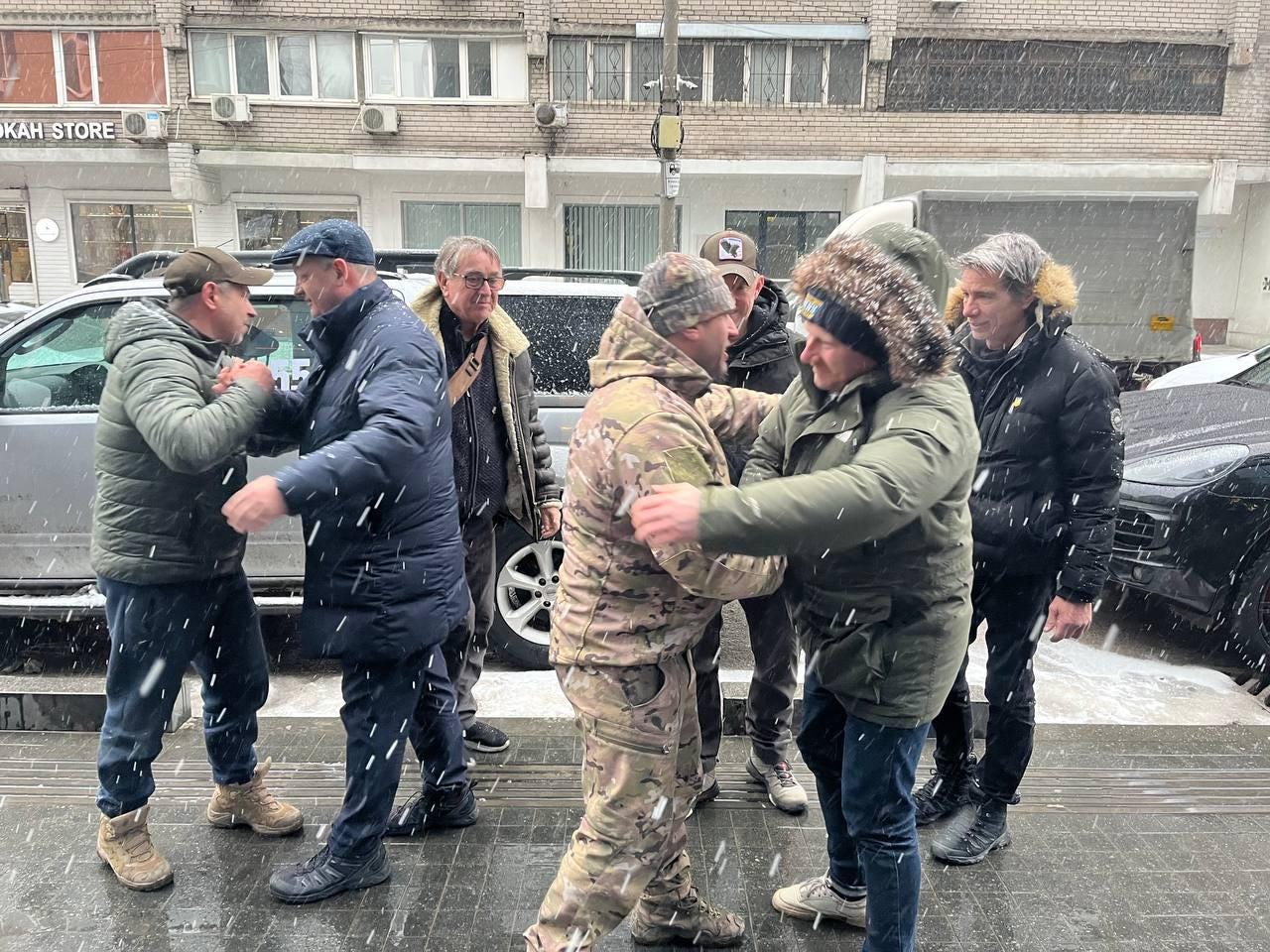
Antoniw, who speaks Ukrainian as his father was Ukrainian, told The Valleys Lead that Welsh and Ukrainian miners have been supporting each other for years, back as far as the 1920s.