


Hello and welcome to The Valleys Lead.
Thanks as always for joining us this week. We have a story this week for you about the restoration (or lack of restoration, as you’ll soon find) of an open cast mine in Merthyr Tydfil, Ffos-y-fran. The drama surrounding this story has been going on for years, and last week, it all came to the surface again with new announcement.
The story is below, but first, we just wanted to say thanks for joining us again this week. If you’re enjoying and/or finding these newsletters helpful and informative, we’d love you to keep joining us every week by subscribing (it’s free!). And if you want to receive our exclusive reporting in full, there is just a small yearly fee (more on that below).
We are hoping to continue to build a community of readers in the south Wales valleys, and you would be doing local journalism a massive favour by sharing these newsletters on your social media feeds, or just sending them to people you think might be interested.
Thanks for reading, and thanks to everyone who has been in touch thus far with story tips. Rest assured, if you come to me with a story, discretion can be guaranteed. We’d love you to get in touch at valleys@thelead.uk or via Bluesky or Instagram with any stories you might have for us.
If you haven’t subscribed yet, please do so below! We’d be over the moon if you financially supported local journalism by paying just a small yearly amount when you subscribe. There’s a sale on right now so seize the day!
We’d love you to subscribe to support local journalism in the south Wales valleys (free and paid subscriptions available!).
If you want to support The Valleys Lead, it’s free to subscribe. Paid subscribers get a bit more for only £4.99 a month, or £49 a year.
It’s also free to share. And it would be a hugely appreciated if you did share The Valleys Lead with all your friends, acquaintances, and colleagues. Thank you!
The Valleys Briefing
(A little round-up of some stories in brief from our valleys.)
As banks across Wales continue to close its doors for in-person banking, a new banking hub in Mountain Ash has opened to protect access to cash for people in the valleys. Customers of all major banks can visit Cash Access UK any weekday between 9am and 5pm to carry out regular transactions. The hub will also include a community banker service for customers to speak in a private space about more complicated issues.
Wales has one of the lowest employments rates in the UK and is falling further behind. Only 71.4% of 16–64 year olds were in work in 2025, compared to 75.1% across the UK. Employment rates remain lowest in the post-industrial south Wales valleys, and Rhondda Cynon Taf had the lowest estimated employment rate at 67.3%.
Torfaen council has funded more than £1m in redundancy costs during the past year. The figure includes more than £200,000 spent making seven teachers across Torfaen redundant. The ruling Labour council has been accused of a lack transparency regarding the number of staff it was shedding. The only reason the information came to light was because an Independent councillor, Giles Davies, had asked for the number of staff made redundant, and the cost to the public purse. “I was shocked to see how much was spent on laying staff members off,” Davies said.
Why isn’t Merthyr Tydfil County Borough Council holding a mining company to account?
Driving into Merthyr Tydfil from Abergavenny, you’ll spot the remnants of the UK’s last opencast mine – Ffos-y-fran. The mine once covered over 360 hectares and was 200 metres deep.
Back in 2003, the land was classified by the Merthyr Tydfil local authority as dangerous and derelict.
“Apparently, legislation dictated that the land had to be made safe,” Chris Austin, who lives near the mine and has campaigned against its continued operation for years with his wife Alyson, told The Valleys Lead.
“The residents were told that the work had to be done, but that the money wasn’t within the local authority to carry it out. The Local Authority claimed that it would bankrupt the authority if they had to pay for it, and if they were to pass those costs onto local residents, each household would have to pay a £900 fee on top of their council tax.”
The only other option was to bring in a private company to mine coal at the site and to sell the coal to pay for the reclamation costs, with any remaining money to be the company’s profit.
“The primary reason it would be mined would be to deliver the reclamation of the site and make the site safe and usable for public amenity and grazing,” Chris said. “It was a land reclamation scheme first and foremost.”
The private company that gained planning permission in 2005 to mine the coal with the promise of the full restoration of the land was initially Miller Argent (South Wales) Ltd. Under original proposals, Chris said that “whatever the cost” to reclaim and restore the land, the mining company would be liable to pay for it. The reclamation and restoration work was a continuous process that would have a final restoration phase starting at the end of the contract in September 2022.
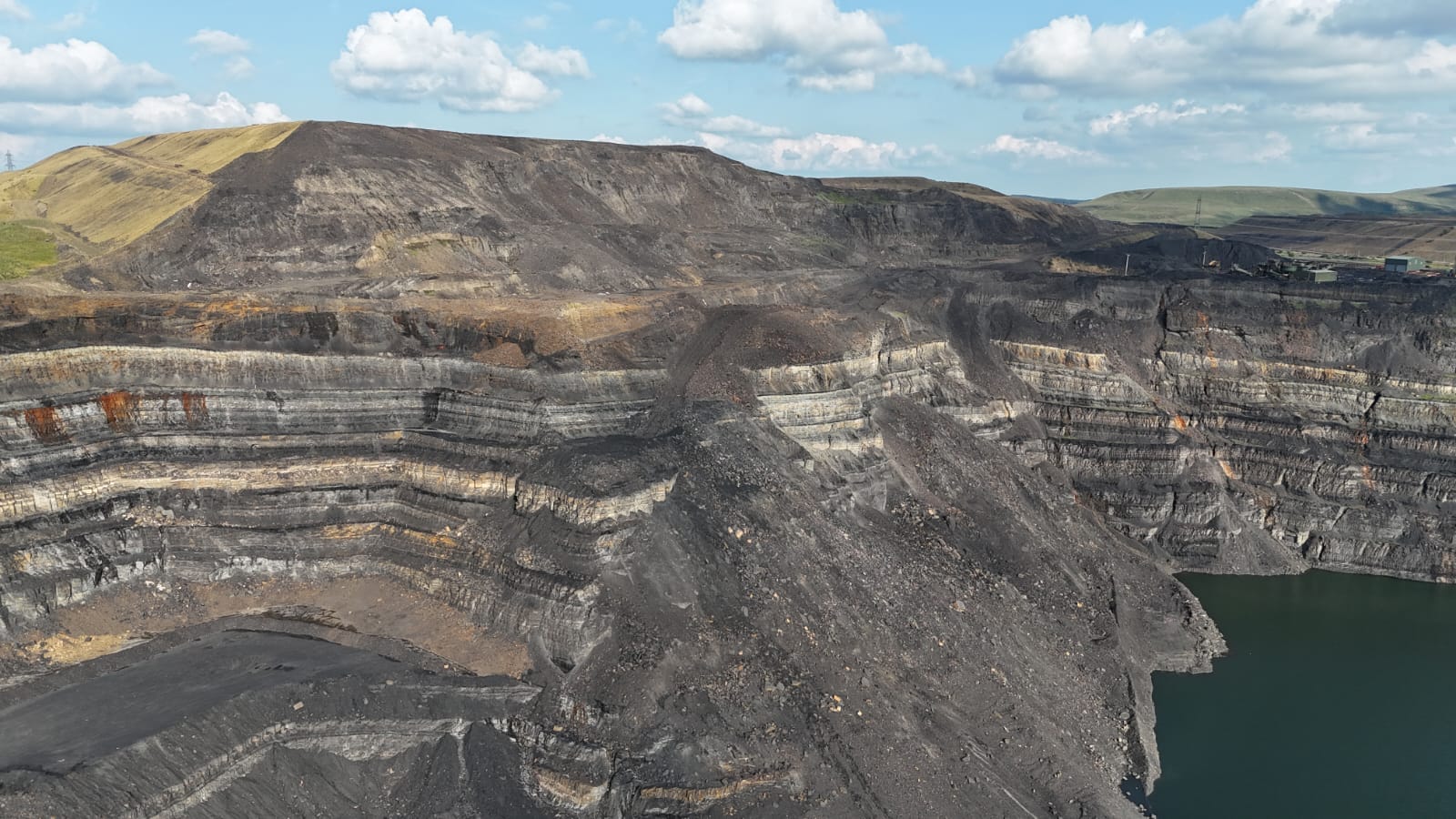
The Welsh Government estimated the cost would be £50-£60 million to restore the land after mining, but figures of anywhere between £75 Million to £125 Million have been used by the company and government departments as the final restoration cost.
In late 2015, Merthyr South Wales Ltd accepted this restoration commitment when it took over operations at the site.
