


Hello and welcome to The Valleys Lead.
Yesterday, I was asked to speak about The Valleys Lead at The International Society of Weekly Newspaper Editors, telling them all about our lush valleys and the people who live here - putting us on the map. You’re the ones to thank - we wouldn’t be able to keep writing without you following along.
Here is what we have for you today. Two hundred jobs are being cut at the only university in the south Wales valleys. Times are tough for universities - there’s no doubt about that (we talk about why below) - but a trade union is asking why unnecessary management-level jobs are being saved, while frontline staff roles are being axed.
The story is below - but just quickly - we’d love you to support The Valleys Lead. There isn’t another publication doing what we are in the south Wales valleys - covering stories from all these valleys, going behind the headlines to report on stories that matter to locals, asking questions of people in power, and speaking with real people in the valleys about their opinions and experiences.
You can support us by simply subscribing to read two newsletters a week from us. There are free and paid options.
Simply type your email and that’s done! Or email laurencrosbymedlicott@gmail.com and she’ll get you subscribed.
The Valleys Briefing
(A little round-up of some stories in brief from our valleys. Anytime you have something you’d like to share, no matter how big or small, email laurencrosbymedlicott@gmail.com):
A Caerphilly Council Cabinet meeting on 22 July will meet to discuss a report on mobile phone use in schools. The report is here. Schools and parents have raised concerns about the impact of excessive mobile phone use on learner wellbeing, behaviour and educational outcomes. While the Welsh Government does not support a blanket national ban, schools and governing bodies are responsible for setting policies that best meet the needs of their learners. All secondary schools in Caerphilly already restrict mobile phone use during lessons, with many operating gate-to-gate policies, while primary schools prohibit mobile phone use throughout the school day. The Council’s endorsement would support these existing measures, helping to reduce classroom distractions, encourage positive social interaction, strengthen online safety and improve pupil wellbeing. Subject to approval, the Council will also work with schools to raise awareness of the benefits of their mobile phone policies among pupils, parents and carers.
Blaenau Gwent Council, the Local Energy Advice Partnership (LEAP), and local community groups are providing face‑to‑face support and advice out in the community. Energy costs remain a concern, especially for older people and those on lower incomes, and people can find it difficult to get the help they need. This support is being offered in places where people feel comfortable like community centres, warm hubs and at local events. A LEAP advisor meets residents in person, explains what’s available, and can also arrange a home visit if needed.
During these visits, people can get:
Free, straightforward advice on saving energy
Help accessing grants and support
Small energy-saving upgrades
Useful items like heated clothes airers to cut down heating costs
If you are involved with a community group who could benefit from a visit by LEAP please email: Anna.Watkins-Hughes@blaenau-gwent.gov.uk
According to Natural Resources Wales, south east Wales is one of the two areas in Wales most affected by recent heat and dry weather. “Prolonged dry weather is a natural event which has become more likely as climate change accelerates,” the organisation stated. “It is the first step in NRW’s Drought Plan for drought status. It occurs when rainfall is lower than expected for a sustained period of time resulting in low river, reservoir and groundwater levels as well as the drying up of land and soils. So far, Wales has only received 5% of the expected rainfall for July, with the current hot, dry weather expected to continue into next week. The intensity of the current weather means that without notable and sustained rainfall in the coming weeks, catchments could quickly deteriorate further." NRW has urged residents to be mindful that wildlife and ecosystems are under more stress, report wildfires to 999, and use less water.
“The lowest paid people are paying the price”: The 200 jobs being cut by the University of South Wales
Back in March, the University of South Wales (USW), the only university in the south Wales valleys, announced it would be making 200 job cuts to “sustain the long-term sustainability” of the university.
Despite having “worked hard to reduce costs” previously, “further action” was required.
“The university, like many other universities across the UK, are suffering from a lack of income,” Dan Beard, Unison branch secretary, told The Valleys Lead.
“Some of that is driven by the hostile environment for visas for international students, previously used to prop up income. That’s coincided with a drop in students who are British, due to costs and growth of apprenticeships. It’s been a perfect storm.”
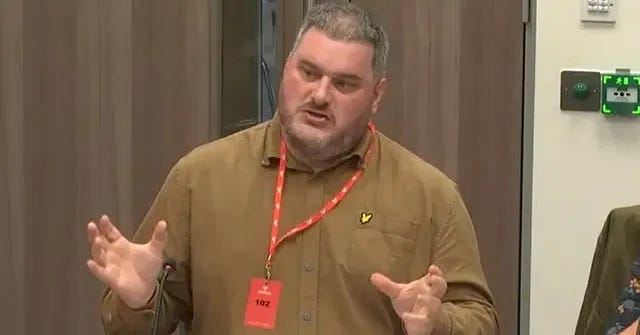
To start, USW offered voluntary redundancies, with around 100 people taking up the offer, Beard said. “There had been no pressure on anyone to go or not go.”
Beard said it “wasn’t’ a huge surprise” that redundancies would be part of the cost-cutting measures. “Cuts are cuts,” he said.
Unison wasn’t opposed to voluntary redundances (there was an attractive package on the table and people made a choice to take this or not, Beard said).
But the trade union started making noise in the last couple of weeks, when they were made aware that compulsory redundancies would be used to make the final job cuts - to get to the 200-mark.
“And they’re targeting staff who directly work with students,” Beard said. “These are jobs in the estates, admin, IT, and student support departments. The employees who remain will face impossible workloads. Some already report working 50 hours a week.”
He said the cuts impact lower-paid workers, rather than management. Given the drop in students (from about 35,000 to now under 20,000), Beard said the management structure has unnecessarily remained the same.
“The university is a large organization with various layers of management,” he said. “It has successfully reduced layers of management before, and the university didn’t collapse. They could do this again. We feel they could make the same level of savings on a lot lets people if they aimed the cuts at the management layers.”
Although the university could cut management layers (and less of them because their salaries are higher) due to a fewer number of students, Beard said they shouldn’t cut student-facing roles.
“We’ve got so many students coming through our doors with enhanced needs,” Beard said. “Neurodiversity is through the roof. They need so much more support. We need to maintain the same level of support for them.”
Beard is fearful these remaining cuts will be detrimental to the staff who lose their jobs, but also to the wider south Wales valleys community.
“It’s terrible for the people who lose their jobs – it’s the lowest paid people paying the price,” Beard said.
“These are quality jobs and they won’t be replaced by anything else locally. Those who lose their jobs will either have to move out of the valleys or find work in Cardiff if they want to earn a similar salary. There’s a real economic impact on the local valleys community.”
But there is a “bigger picture here,” he continued.
