


Hello and welcome to The Valleys Lead.
This week, we’ve got a story for you about children in Rhondda Cynon Taf showing up to school soaking wet, waiting endlessly for public buses to get to school, navigating dangerous roads, and worrying about who they might encounter on the walk to and from school.
If you want to support The Valleys Lead, it’s free to subscribe. Paid subscribers get a bit more for only £4.99 a month, or £49 a year.
It’s also free to share. And it would be a hugely appreciated if you did share The Valleys Lead with all your friends, acquaintances, and colleagues. Thank you.
Thanks for reading, and thanks to everyone who has been in touch thus far with story tips. Rest assured, if you come to me with a story, discretion can be guaranteed. Get in touch at valleys@thelead.uk or via Bluesky or Instagram.
For now, all the newsletters are free, but soon enough, some of our exclusive reporting will be only for subscribers.
If you want to support The Valleys Lead, it’s free to subscribe. Paid subscribers get a bit more for only £4.99 a month, or £49 a year.
It’s also free to share. And it would be a hugely appreciated if you did share The Valleys Lead with all your friends, acquaintances, and colleagues. Thank you.
The Valleys Briefing
(A little round-up of some stories in brief from our valleys.)
A notice of motion approved by Rhondda Cynon Taf has called on the council to look into the possibility of twinning with the Ukrainian Pavlohrad. The two areas both have rich mining history, among other similarities, the motion said. The motion also calls on the council to “condemn the continued aggression of the Russian invaders and reaffirm its unwavering support for Ukraine and its people.”
Merthyr Tydfil has missed the 70% recycling target last year which means the council could face a £192,000 fine. The council was one of 10 other councils not to meet the target. The council report said that there is still 52% of recyclable materials being placed in refuse bins in Merthyr.
£808,800 in funding from The National Lottery Heritage Fund will be invested across Torfaen to improve access to nature. Torfaen Council is one of only two local authorities in Wales to be awarded funding from The National Lottery Heritage Fund. Nick Thomas-Symonds MP said he is hopeful the funding will help alleviate the impacts of flooding and enhance biodiversity.
“My child is walking six miles to school every day.”
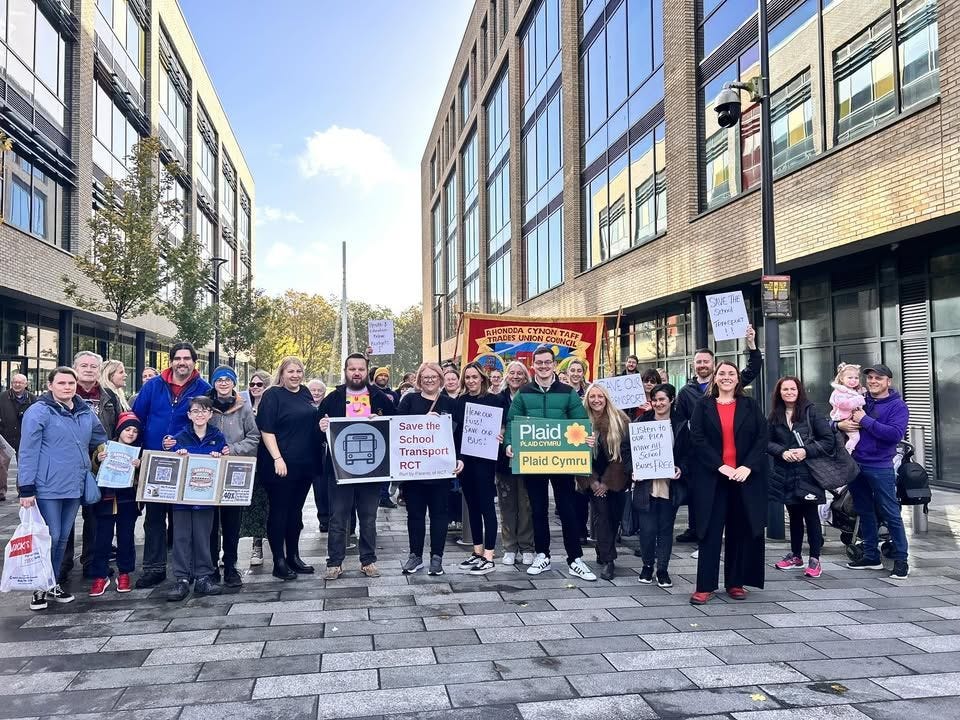
Laura Hill’s world was turned upside down when Rhondda Cynon Taf announced that from September, only children who lived three or more miles away from their secondary school would receive free school transport, a change from the previous threshold of two miles or more.
Since the change, Laura has found it difficult to arrange shifts with her retail employer to get her two children, aged 14 and 15, to and from school, but more importantly she’s felt relentless stress about how they will safely get to school on days she can’t do the school run.
“It’s frustrating that the council have made these cuts, and my children are expected to walk 2.6 miles with a heavy bag, in their school blazers, to school,” the 35-year-old mother of two in Abercwmboi, Aberdare, told The Valleys Lead.
Laura walked the route suggested by the council, videoing “how dangerous it was, and all the hazards - blind spots, cars parked on pavements, thin pavements, and cars speeding.”
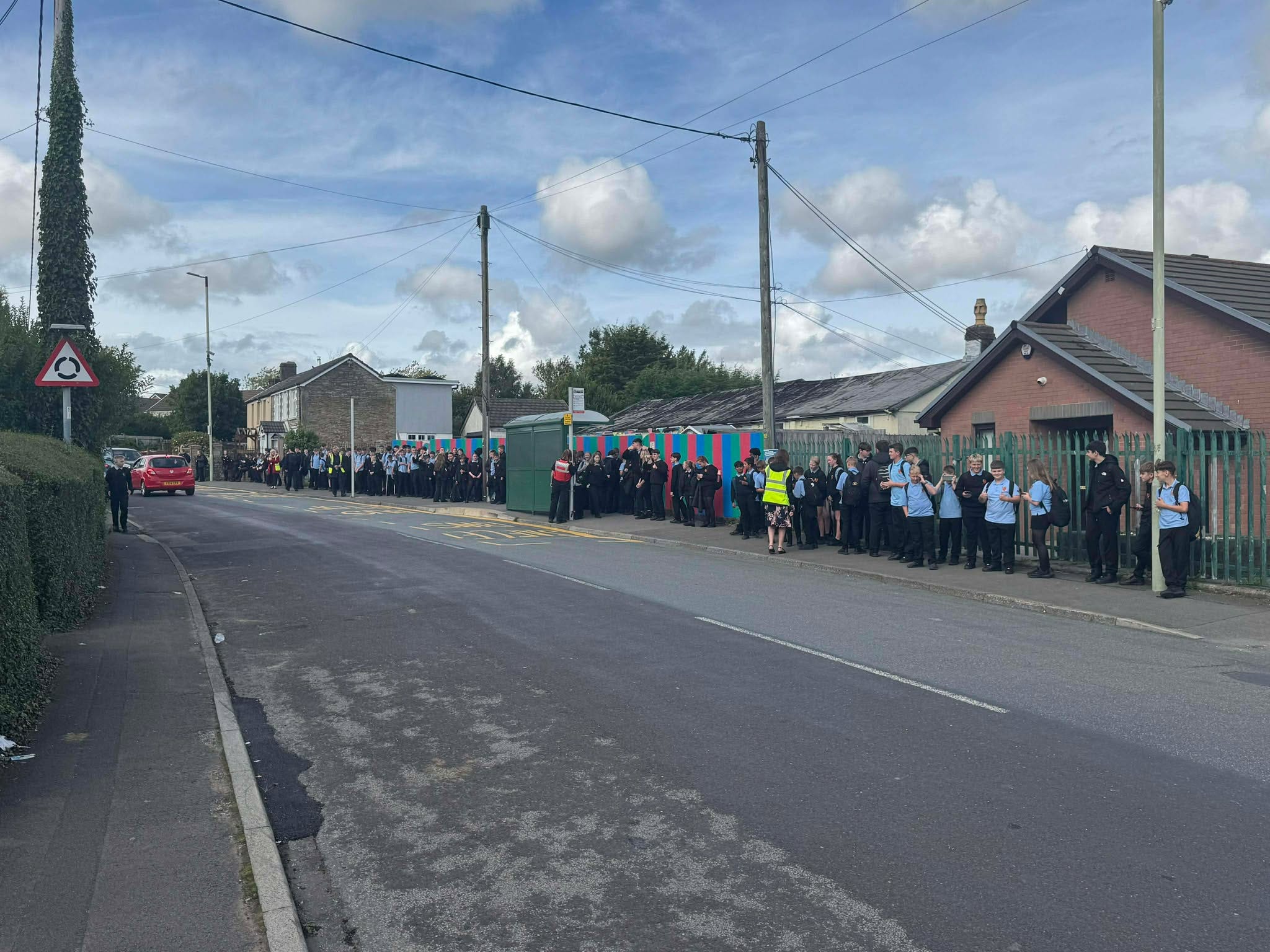
If they don’t walk, the children take the public bus, but recently, that bus has passed them by making them over half an hour late for school.
“There was one incident my son was verbally attacked by a man on drugs at a bus stop,” she said. “The man got in his face and tried to hit him while they were waiting for the public bus.”
She’s heard from other families who simply can’t afford to send their children on the public bus – “the fairs can add up each month,” she said.
Although some might argue that they “used to walk to school every day in my day,” Laura argued that times have changed: “There are more cars on the road now, more accidents, and a lot more antisocial behaviour.”
A group of concerned locals started meeting to discuss their concerns raised by many parents, getting members from Plaid Cymru on board to advise them what could be done.
“With their support we started a Facebook group,” Tina Collins, one of the founding members of Save the School Transport RCT, told The Valleys Lead.

“A total of 2900 students are being affected by this decision,” she said. “Parents are facing long delays in traffic with drop offs to school and then to work, with some having to drop hours in work. Children are waiting for the sixth bus to arrive because the others before are full.
“In winter months we already have had numerous weather warnings including rain, wind, snow and ice. Students are arriving to school late and receiving detention even though it is no fault of their own.”
Parents have told Tina how they are struggling to afford the daily journeys for the children, even with the one-pound cap per journey.
Children with additional needs are “getting confused with their stops” and “having panic attacks at bus stops.”
And all children are getting soaking wet, arriving at school dripping.
When The Valleys Lead approached Rhondda Cynon Taf Council for comment, a spokesperson said: “We spend around £13 million per year on Home to School Transport. The changes were unfortunately necessary for us to maintain affordability within future financial constraints, continue to be able to meet our statutory requirements, and maintain discretionary transport for our most vulnerable learners such as those with ALN.”
They noted the changes would make an annual saving of around £2 million. “We still provide transport for thousands of learners every week over and above what is required under Welsh Government’s Learner Travel Measure. This alone costs us £4.8m each year, and over a third of those currently using Home to School Transport would not be entitled to transport if we didn’t provide over and above what is necessary.”
Tina said that to have stories from affected families sent to her is “awful”.
“When we approached RCT with our concerns, we were told lack of funding from Welsh Government was the problem,” she said. “When we approached Welsh Government, we were told it is down to local authorities.”
Tina and other campaigners had been told by Welsh Government officials that a meeting would be arranged in January 2026 to discuss concerns with parents, but the date for the meeting has yet to be confirmed even though we’re now in February.
Another mother, Tanya, whose name has been changed, told The Valleys Lead that her home address is 3.5 miles from Bro Taf High School in Pontypridd, but the council have devised a route for the children to walk that is 2.97 miles from the school.
“This route means that my children are now walking nearly six miles a day to access education,” Tanya said. “This route includes them crossing two slip roads to the A470.”
Her son, who is 11, has been “severely impacted” by this change. “He had to start year 7 walking into the high school by himself every day, trying to find people he knew before the bell rings before registration. This caused him a huge amount of anxiety on top of feeling anxious about starting high school. He doesn’t want to get up; he doesn’t want to walk to school in this weather. I don’t blame him. Who would want to walk 3 miles in the cold and wet?”
Their other option, like with Laura’s children, is the bus. “The bus station is 1.2 miles away from our home,” she said. “That’s still a 20-minute walk through a town centre with a high crime rate. Is it safe for my 15-year-old daughter to walk through a dark town centre. No, it is not. Is it safe for my 11-year-old child to walk by himself through a dark town centre to reach the bus station? No, it is not.”
The change has affected Tanya “professionally, financially, and mentally,” and the impact on her kids is massive, but said the “council do not care.”
While campaigners have been let down by Labour, Tina said that the politicians who have been helpful in raising awareness of their cause are those from Plaid Cymru, specifically MS Heledd Fychan and her team.
Fychan told The Valleys Lead that “ultimately, the Labour Welsh Government” is to blame, as they are the ones who set the statutory guidance on school bus transport, which holds that it is only children three miles or more who can have free school transport.
“I’ve had a lot of people tell me that they will be changing their vote next time from Labour, and some campaigners are even interested in standing for Plaid Cymru,” Fychan told The Valleys Lead. “They’ve been disappointed by the lack of support they’ve received from their local Labour Councillors.”
Tina also mentioned Conservative councillor Karl Johnson, as another politician who has been supportive, and who The Valleys Lead spoke with.
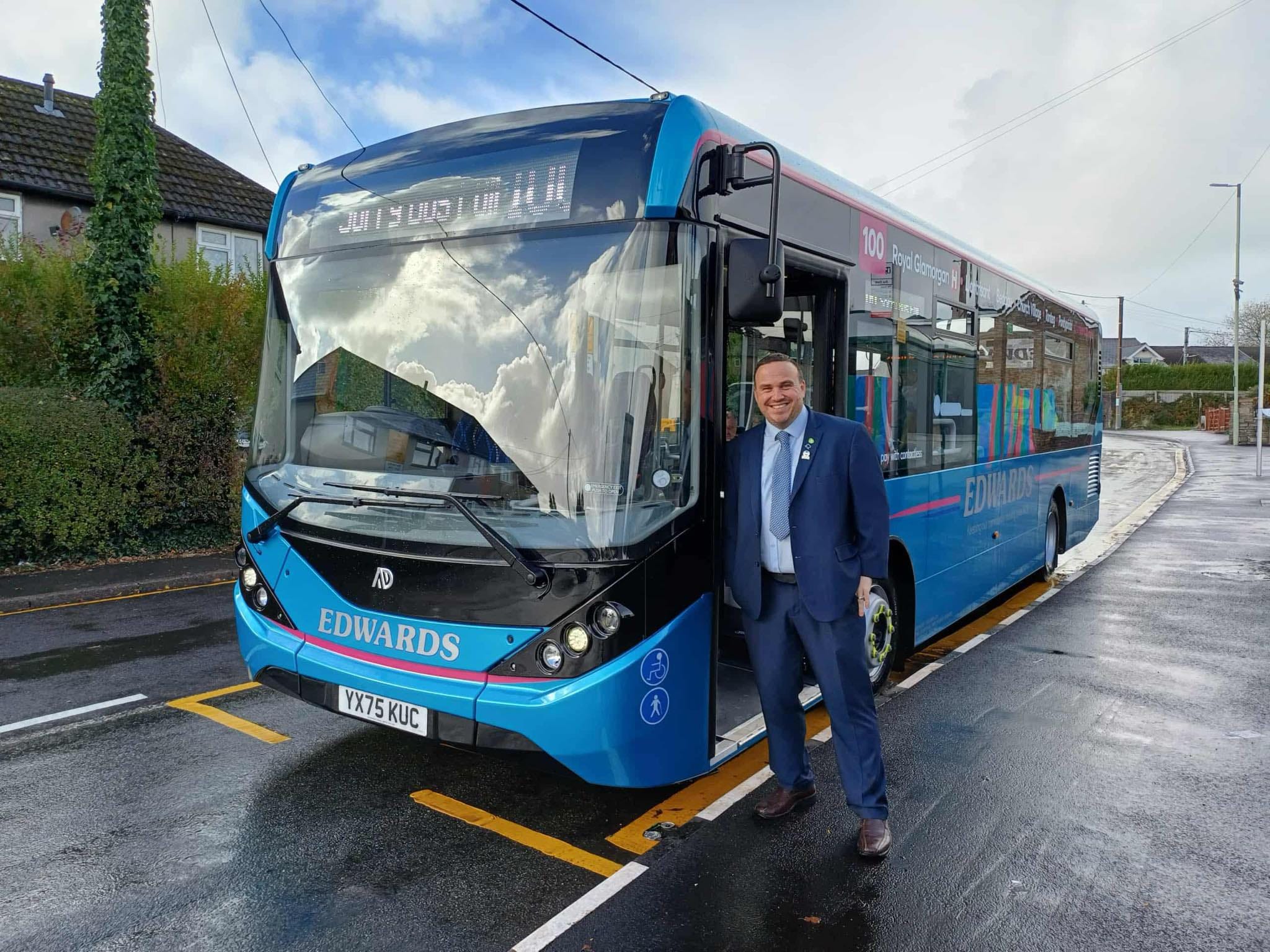
He and others had consulted on the changes prior to being set in stone, saying there was “cross party support” (apart from Labour) about the concerns – “which is quite rare these days.”
“But Labour still voted for the budget to go through,” he said. “There wasn’t a vote, it was just built into the budget, cutting school transport.”
“Residents are saying they don’t feel politicians are listening to their concerns about the safety of their children,” he concluded. “They are bearing that in mind when they vote in the upcoming Senedd election and the local elections in 2027.”
This is such an important story to tell. The way councli cuts to school transport are playing out in real communities is alarming, families caught between their jobs and thier kids' safety. The policy change sounds completely disconnected from the daily realities families face.