

Hello and welcome to The Valleys Lead.
We genuinely hope that you are doing okay right now, as the news coming in from around the world is harrowing and frightening.
Thanks for joining us again this week. If you’re enjoying and/or finding these newsletters helpful and informative, we’d love you to keep joining us every week. We are hoping to continue to build, and you would be doing local journalism a massive favour by sharing these newsletters on your social media feeds, or just sending them to people you think might be interested.
And if you haven’t subscribed yet, please do so below! We’d be over the moon if you financially supported local journalism by paying just a small yearly amount when you subscribe. There’s a sale on right now so seize the day!
This week, we’ve got a long one for you. In the south Wales valleys, you will no doubt have heard many a myth about asylum seekers and refugees. We want to pre-empt many of your questions here - not to judge, but to promote conversation and understanding.
If you want to support The Valleys Lead, it’s free to subscribe. Paid subscribers get a bit more for only £4.99 a month, or £49 a year - but we’ve got a St David’s Day treat for you as we now have 30% off if you subscribe during March. More details below.
We’d love to you subscribe. Simply share your email to receive newsletters from us twice a week.
Thanks for reading, and thanks to everyone who has been in touch thus far with story tips. Rest assured, if you come to me with a story, discretion can be guaranteed. Get in touch at valleys@thelead.uk or via Bluesky or Instagram.
From this week - some our exclusive reporting will be just for paying subscribers. We don’t have ads, we don’t do clickbait and all of our reporting is done right here in the valleys. If you sign up right now, you get 30% off your subscription forever - whether you pay annually or monthly. We believe journalism done properly is worth paying for and we hope you can support us.
It’s also free to share. And it would be a hugely appreciated if you did share The Valleys Lead with all your friends, acquaintances, and colleagues. Thank you!
The Valleys Briefing
(A little round-up of some stories in brief from our valleys.)
Laura Anne Jones, Reform UK’s only MS, who was banned from the Senedd for two weeks last year for using a racial slur about Chinese people, later denying she is racist, has said this week: “There has been uproar over new guidance in England, allowing children as young as four to socially transition, changing names and pronouns in the classroom. But in Wales, this is nothing new. Schools have long been encouraged to push gender ideology on small children. Biological reality shredded. Parental rights trampled. Kids’ minds indoctrinated. All under the guise of inclusion. Children as young as four should not be confused about basic biology. In Reform, we are crystal clear. Law and facts trumps ideology. We defend women’s girls rights. We back parents.”
This week, Councillor Declan Sammon of Dowlais and Pant Community Independents announced he has stepped down from his role as cabinet member for transformation, governance, and social partnership. His farewell has left lots of questions with no answers. All we’ve been told is that Councillor Brent Carter, the Labour leader of the council, will temporarily take on this cabinet responsibility.
Last week, the Welsh Parliament gave its consent to Westminster legislation that would allow terminally ill people to obtain a medically assisted death. First Minister Eluned Morgan and Health Secretary Jeremy Miles were among those who voted against. No matter how the consent motion had gone last week, if the law passes in Westminster, the practice would have been legal anyway in Wales, with Wales’ Parliament only left to decide on how to implement it. The motion was backed by 28 Senedd members, with 23 against and two abstentions. Delyth Jewell, Plaid Cymru’s MS for South Wales East voted against, saying: “The fear and terror I have is how this will end in situations where disabled people, those who are poor or lonely or abused will be led to feel they have no choice but to end their life.”
Let’s do a bit of myth-busting about asylum in the south Wales valleys
It’s been announced this week that big changes are in store for the UK asylum system. Home Secretary Shabana Mahmood announced that from Monday, 1 March 2026, any asylum seeker successfully given refugee status in the UK will be offered only temporary protection. It’s a huge change to the UK’s asylum system, and the changes will come into force without a parliamentary vote as they simply change existing rules.
Whereas previously, refugee status was granted for a five-year period, from this week, refugees will only be given a 30 months’ status, with protection in the UK reviewed at the end of that period.
The British Red Cross Director of Policy, Research and Advocacy said of the changes: “The plans will leave people in need of protection and safety in a perpetual state of limbo, where they can neither focus on recovery or plan for their future. We must never forget that behind the headlines are men, women and children who have already endured the trauma of war and persecution. We need a fair and compassionate asylum system, one that aligns with the UK’s long and proud history of providing protection for refugees, particularly in these uncertain times.”
Altaf Hussain, Welsh Conservative MS for South Wales West is in favour of this changing, saying to The Valleys Lead: “It's right that reviewing statuses periodically protects taxpayers that fund sanctuary since, by definition, refuge remains temporary. With increasing illegal immigration persisting predominantly via Channel crossings, it is imperative UK residents regain confidence in border protection policies whilst we focus in parallel on urgently enhancing community cohesion. I‘d like a welcoming Wales where we understand our differences don’t come before British values like toleration, respecting rule of law, and achieving balance between duties & rights where we all play our part in strengthening society.”
Opposing the change is Alun Davies, Labour MS for Blaenau Gwent, who told The Valleys Lead: “I’m very disappointed in this. Our Welsh Labour values mean that we reach out to support some of the most vulnerable people in the world. Becoming a refugee and losing your home because of war and conflict is a trauma. I would expect our governments to help and support people rather than cause them harm.”
With this news, The Valleys Lead thought it would be ideal timing to bust several myths we’ve heard lingering in the south Wales valleys about the asylum system.
We sat down with Paul Shackson from The Welsh Refugee Council to get the facts – facts that might have been overlooked and mispresented through click-bait headlines and social media rants.
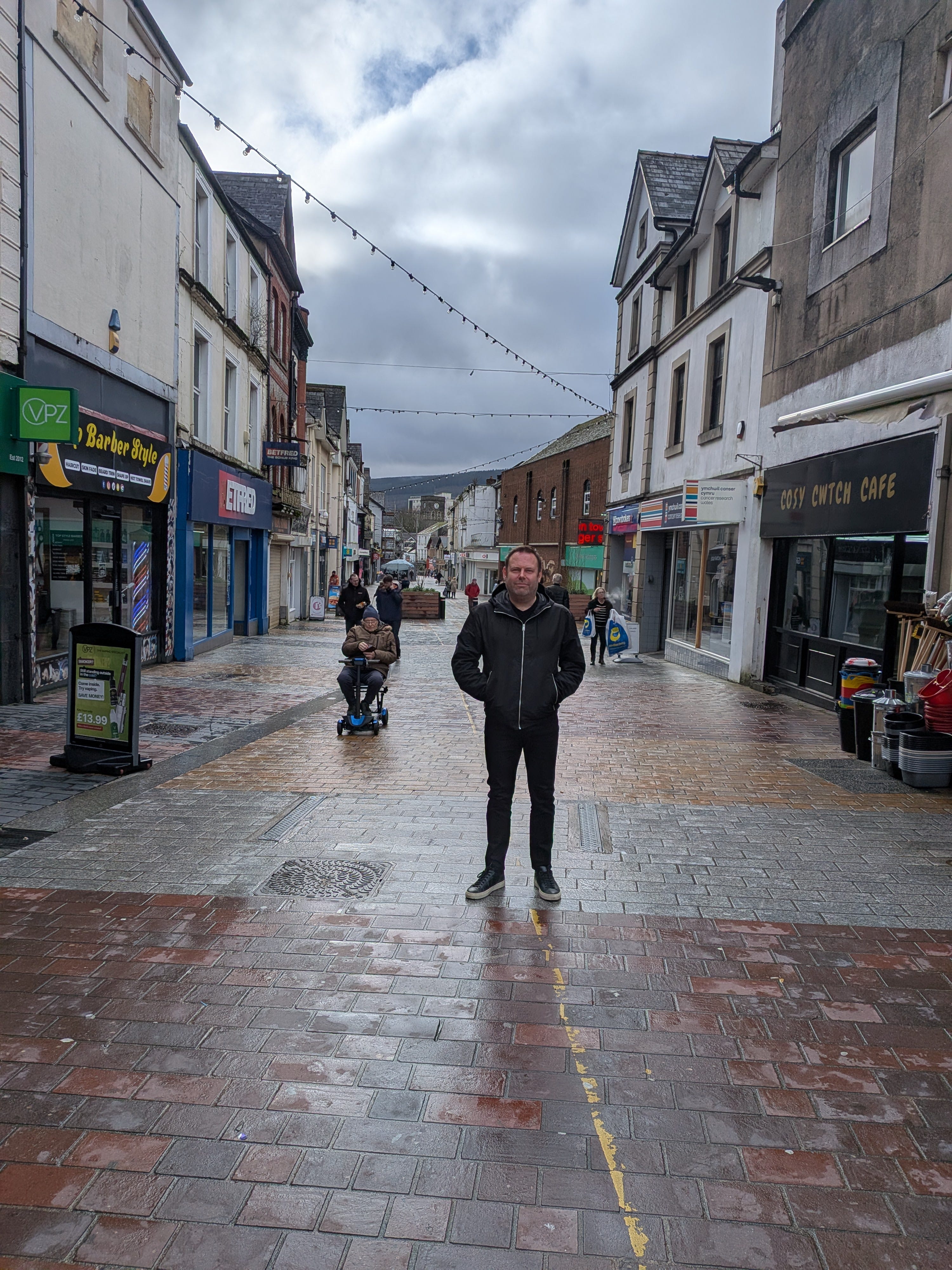
“There is a lot of misinformation currently in the public sphere,” Paul told The Valleys Lead. “We want to provide an opportunity to present the right facts and figures, and explain what asylum seekers and refugees have and continue to go through.”
He said that in the valleys, and elsewhere in Wales, asylum seekers and refugees are depicted negatively – as people who shouldn’t be here, people who shouldn’t be helped, and people who bring nothing to our society.
“That’s completely wrong,” said Paul.
It’s worth defining terms here at the start
Who is an asylum-seeker? A person who has left their country of origin and formally applied for asylum in another country, but whose application has not yet been concluded. Whilst the Home Office decides if they are in fact a refugee, asylum seekers have a legal right to stay in the country while waiting for a decision.
People seeking asylum are looking for safety, and they often choose to make the journey to the UK because they have family or friends here, or because they speak English (due to historic British colonialism).
Who is a refugee? In the UK, a person becomes a refugee when the government agrees that an individual who has applied for asylum meets the definition in the Refugee Convention. They will “recognise” that person as a refugee and issue them with refugee status documentation (this is what is changing from this week). A refugee has proven to the UK Government that it would be a risk to return to their home country.
Is the asylum system a devolved issue?
You may have read it, heard it, or watched it – people in the south Wales valleys demanding that asylum seekers and refugees stop coming to Wales.
