


Hello and welcome back to The Valleys Lead.
Matthew Jones never planned to become a ceramicist, but what began with two pottery wheels and a borrowed van has grown into a thriving ceramics business based in Blackwood. Nearly two decades on, he supplies cafés and restaurants across the south Wales valleys (and much further afield) while continuing to share his love of pottery through workshops. His journey is a testament to the power of persistence, community support and the possibility of building a successful creative career without leaving the south Wales valleys.
The story is below (free to read today!) - but just quickly - we’d love you to support The Valleys Lead.
There isn’t another publication doing what we are in the south Wales valleys - covering stories from all these valleys, going behind the headlines to report on stories that matter to locals, asking questions of people in power, and speaking with real people in the valleys about their opinions and experiences.
This kind of journalism takes time and effort, and we’d love your support to keep reporting about stories that need to be heard.
You can support us by simply subscribing via free and paid options. You’ll get to read two newsletters a week from us. Each edition has three very brief news updates from the south Wales valleys, and a slightly longer-length story.
Simply type your email and that’s done! Or email laurencrosbymedlicott@gmail.com and she’ll get you subscribed.
We also always want to hear what is happening in your valley, your town, your village (seriously! no story is too small). Please email laurencrosbymedlicott@gmail.com with anything you feel we should cover.
The Valleys Briefing
(A little round-up of some stories in brief from our valleys. Anytime you have something you’d like to share, no matter how big or small, email laurencrosbymedlicott@gmail.com):
Plaid Cymru Senedd Member Lindsay Whittle has presented the case for retaining a Victorian railway tickets office as part of a new £33m transport interchange in Caerphilly. The Blaenau Gwent, Caerffili, Rhymni MS met Deputy Transport Minister Mark Hooper and presented images created by a Caerphilly resident of how the ticket office could form part of the development. Whittle, who opposes demolition of the existing Victorian ticket office as part of the development said: “I thought the meeting with Mark Hooper was useful and he listened closely to the case to save the old ticket office. But I understand that the issue is not just one for the Welsh Government but also for Transport for Wales and the local authority who have submitted a planning application. I hope even at this late stage the plans can be amended because it is quite possible to have both the old ticket office and the new interchange.” Whittle pointed out that ticket office was unique in Caerphilly as many other significant old buildings have been demolished. He pointed out that the area had lost a school that was built in the late 1800s, the town’s old police station, a number of old banks, a cobblers shop from the 1700s and the old Clive Hotel, a magnificent building. “This is the last of the 100 year old buildings with the exception of Caerphilly Castle, a chapel and the old Courthouse,” added Whittle.
Patients at a GP practice in Pontypool - The Panteg Health Centre - have been sent phantom appointments via text message due to a malfunctioning computer system. For example, one patient learned she didn’t have a Friday appointment with her GP when she arrived at the surgery. The surgery has since apologised and said they are working to resolve the issue.
Fresh calls have been made to reinstate nine axed school transport routes in Caerphilly, despite the Council insisting they were safe and met Wales’ minimum distance rules. Plaid Cymru councillors Teresa Parry and Steve Skivens have raised concerns over the robustness and transparency of route assessments, arguing they may not reflect seasonal conditions such as poor weather, reduced daylight and heavier traffic. They are calling for a new, child-centred review and for transport to be reinstated in the meantime. However, a Labour group spokesperson accused the opposition of “hypocrisy”, arguing Caerphilly’s policy is more generous than those in other parts of Wales. The motion, backed by 16 other councillors, was debated at a scrutiny committee on Tuesday, October 13. We will update you on the outcome.
He never planned to be a ceramicist. Now his work is finding its way across Wales.
Growing up in Bargoed, Matthew Jones had “every intention” of becoming a mechanic in the Royal Air Force.
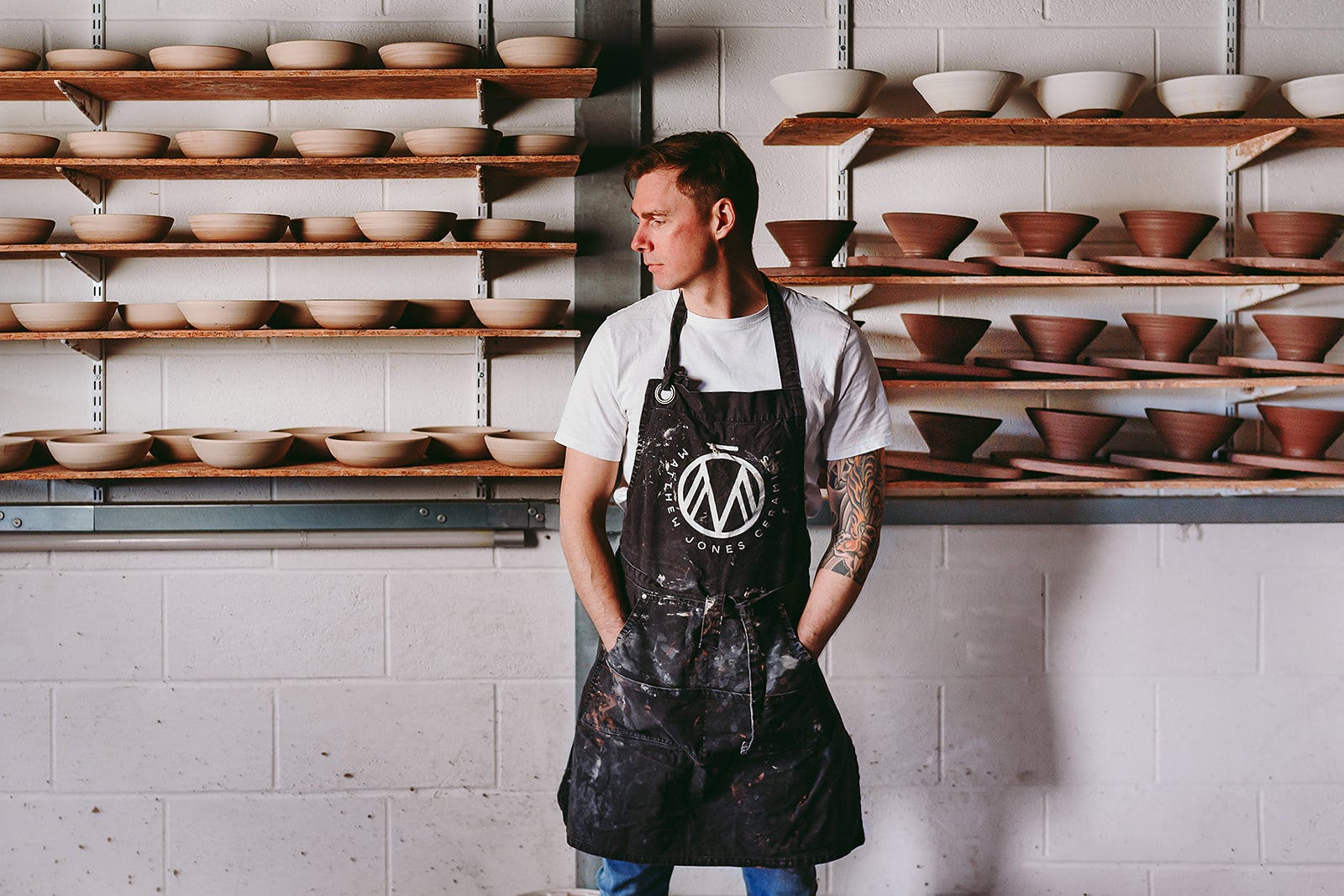
“It’s all I ever wanted to do because that’s what my grandfather had done, and he was a big influence in my younger life,” Matthew told The Valleys Lead. “I wanted to be like him.”
Not “very academic” and later diagnosed with dyslexia, Matthew found his happy place in the art classroom at school.
At 16, his art teacher asked about his plans for the future and encouraged him to apply to art college.
“I sent off my application for art college and applied for a Ministry of Defence apprenticeship,” Matthew said. “I didn’t get the apprenticeship, but I did get accepted into art college.”
Art college in Pontypridd introduced Matthew to the world of art and brought lifelong friendships with like-minded people. For the first time, he felt he had found his people.
But it was his discovery of ceramics that would ignite a lasting passion and give him a sense of direction.
At 19, Matthew visited the ceramics department at the University of Wales Institute in Cardiff and loved the “feel of the place”, with its black walls and students drinking cider.
When he told his sister about his interest, she secretly contacted the ceramics department. Matthew was called in for an informal chat, and days later, Matthew had started the course.
It was the beginning of a lifelong relationship with clay.
At the time, he had little idea where his studies might lead, but he knew he enjoyed making things.
“I enjoyed the course, I enjoyed the people on the course, I enjoyed the making,” he said. “That’s what’s always kind of stuck with me.”
After graduating, Matthew knew he wanted to give ceramics a proper chance. Moving to a bigger city, where he might find more opportunities, simply wasn’t financially possible.
“I didn’t have the resources to kind of up sticks and move to London, for example,” he said.
He briefly worked on building sites before deciding to try to make a living from his craft.
“Otherwise, what would have been the point?” he said.
Moving back in with his parents, Matthew signed on at the job centre, hoping to access support to turn his skills into a business.


“I had the skill, but I needed to learn how to monetise it,” he said.
With help from the job centre, a start-up grant and a loan from his father, Matthew developed a business plan, acquired his first pottery wheel and then a second, and bought a van.
For years, Matthew travelled around youth clubs across the south Wales valleys, giving young people the opportunity to try pottery for themselves.
“I was just giving kids an opportunity to have a go,” he said.
The business was built around the experience of making something on the wheel, rather than the finished product. Without access to a kiln, Matthew focused on introducing young people to the process of working with clay.
Initially, some of the teenagers were hesitant. But by the end of a session, even those who had arrived unsure about pottery were hooked.
“All these tough 16-year-olds who thought they were solid, they were loving it, making their mums’ vases,” he recalled.
“It’s a real leveller,” he said of clay.
Building a business from scratch required plenty of graft. Matthew would flick through the Yellow Pages, looking for charities, organisations and businesses that might be interested in hosting a workshop, then pick up the phone and try to make connections.
“I wasn’t making a million pounds, but I was a young man paying my own way and making money for the weekend,” he said.
But the financial crash of 2008 and subsequent austerity measures brought new challenges. Funding cuts to local authorities and third-sector organisations meant that many of the community projects Matthew worked with could no longer afford to run workshops.
With that work drying up, he needed a new way to sustain the business.
Around 2010, he secured a workspace in Blackwood, giving him somewhere to make ceramics for sale. Alongside occasional workshops, he began producing pieces for craft markets and developing the functional pottery that would eventually become a significant part of his business.
More than 20 years after first setting up his business, Matthew has established himself as a ceramicist supplying cafés, restaurants and hospitality businesses across the region.
His work has found its way into establishments including Pasture, Big Dog Coffee, Nook, FIR at The Vine Tree in Crickhowell, and Coco’s Coffee, to name just a few.
He also continues to make ceramics for individual customers and runs workshops from his Blackwood base.
It is a far cry from those early days with two pottery wheels and a van, but Matthew is quick to acknowledge the people who helped him along the way.
“I feel very grateful and very lucky,” he said. “There was so much goodwill from a lot of people.”
From the organisations that booked his first workshops to the people who provided him with workspace, he said, many wanted to see him succeed.
“Everyone has wanted me to succeed,” he said.
Another important factor in building the business has been social media, which has allowed Matthew to reach customers far beyond the south Wales valleys without having to relocate.
When he first started out, building a website and establishing an online presence could cost thousands of pounds, making it difficult for small independent makers to promote and sell their work beyond their immediate area.
Today, his website and social media have opened up a much wider market.
“It’s removed so many barriers,” he said. “People like myself don’t necessarily need to move away to build a platform. They can build that platform from their own [area] and still reach a wider audience.”
For a business rooted in Blackwood, that wider reach has helped turn a local craft into a livelihood with a national audience.
Matthew didn’t begin with a clear plan for what he would do with his love of ceramics. His journey has been shaped by practical decisions, unexpected opportunities and challenges that have forced him to adapt.
But nearly two decades on, he has built a business that brings together his love of making, his work with communities and his relationships with independent businesses.
His story is a reminder that creative careers don’t always follow a straight line. Sometimes they are built slowly, through hard work, persistence and the support of people who believe in what you’re doing.
And sometimes, staying where you started can be an opportunity in itself.
Find Matthew and his work here.
You can follow him on Instagram here.