

Hello and welcome to The Valleys Lead.
The south Wales valleys needs more foster carers as there are rising numbers of looked-after children and not enough people to take care of them. The Valleys Lead spoke with one foster carer in Tredegar about her 20 years of fostering, and looked into big changes ahead as Wales plans to remove profit from children’s care.
If you’d like to speak to The Valleys Lead about social care stories in the valleys, please email valleys@thelead.uk. We’re always up for hearing from readers.
Before you read the story, we just wanted to say thanks for reading, and thanks to everyone who has been in touch thus far with story tips. Rest assured, if you come to me with a story, discretion can be guaranteed. We’d love you to get in touch at valleys@thelead.uk or via Bluesky or Instagram with any stories you might have for us.
If you haven’t subscribed yet, please do so below - there are free and paid options. We’d appreciate it if you financially supported local journalism by paying just a small yearly amount when you subscribe.
Just enter your email to support exclusive local journalism in the south Wales valleys.
If you want to support The Valleys Lead, it’s free to subscribe. Paid subscribers get a bit more for only £4.99 a month, or £49 a year.
We’d love you to support our local, exclusive journalism in the south Wales valleys
It’s also free to share. And it would be a hugely appreciated if you did share The Valleys Lead with all your friends, acquaintances, and colleagues. Thank you!
The Valleys Briefing
(A little round-up of some stories in brief from our valleys.)
More than £1.4m has been spent by Caerphilly Council to remove fly-tipping since April 2015 and Plaid Cymru believes changes to waste collections, recycling rules and access to tips have worsened the situation. A Freedom of Information request by Plaid Cymru also revealed there had been a staggering 23,914 fly-tipping incidents over the same period. Caerphilly Plaid Cymru group leader Charlotte Bishop said: “When it becomes harder, more confusing or more restrictive for people to dispose of waste legally, the impact does not disappear — it ends up dumped in lanes, woodland, riversides and communities across the county borough. The environmental damage caused by fly-tipping is serious. Dumped rubbish pollutes soil and waterways, harms wildlife, attracts rats and vermin, increases the risk of toxic materials leaking into the environment and destroys the natural beauty of our valleys and green spaces.” She highlighted the fact that plastic waste and household rubbish could remain in the environment for years with contamination of streams and land. Dangerous materials dumped illegally can contaminate streams and land. “Beyond the environmental impact, there is also the human cost. Residents in Caerphilly county are fed up seeing their communities repeatedly blighted by rubbish, black bags, furniture and waste dumped near homes and beauty spots.”
A council by-election is set to be held in Merthyr Tydfil after Reform UK’s David Hughes stood down from his role after being elected in the Pontypridd Cynon Merthyr Senedd seat.
Plans for 28 homes for social rent have been lodged with Blaenau Gwent at the site of a former care home in Brynmawr. The development would be made up of 16 one-bedroom apartments, two three-bedroom bungalows, two three-bedroom semi-detached house, two four-bedroom semi-detached houses, and five two-bedroom terraced houses. A decision is expected by July 24. If you would like to speak with us about transforming buildings into social housing in the valleys, please email valleys@thelead.uk.
“Fostering has made me a better person.”
In 2006, Caroline Jones first considered the option of foster care when a social worker dining at her bakery asked if she’d ever thought about it as a possibility.
“They were desperate for foster carers,” the now 62-year-old told The Valleys Lead. “My husband and I had just gotten married – it was our second marriage. We each had children, but they had all flown the nest. It was kind of like empty nest syndrome.”
After giving it some thought, Caroline and her husband agreed to train as foster carers for the local authority, and when Caroline was 41 years old, the couple started welcoming children into their home in Tredegar.
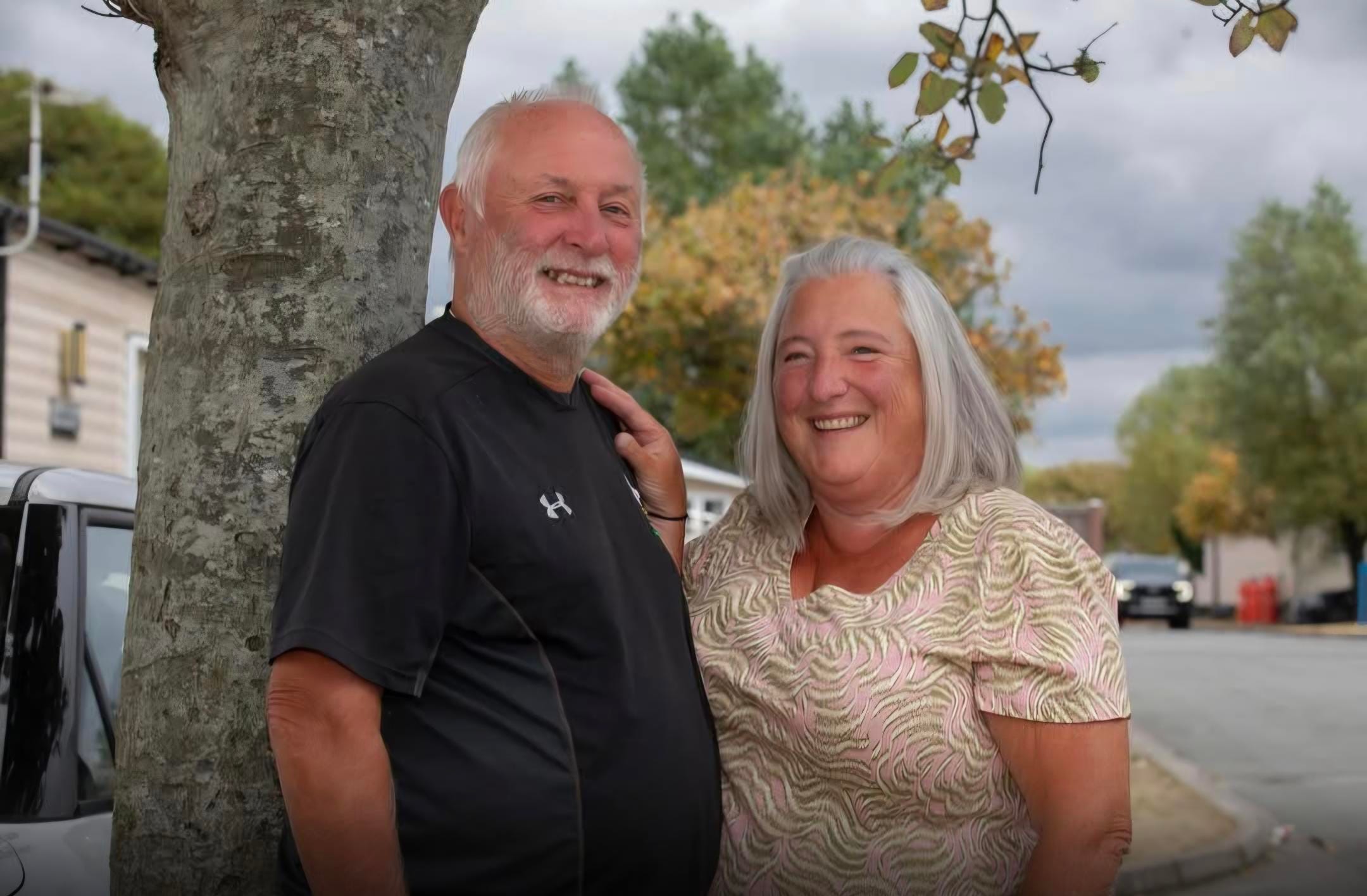
They had initially thought the foster children they had to stay would “be like their children,” but quickly realised it was a “totally different ball game.”
“There had been no boundaries – a totally different life,” she said.
But Caroline wouldn’t let a challenge stop her. “If I’m going to do something, I’m going to do it to the best of my ability, otherwise there is no point,” she said. “You’ve got to be prepared to take everything. They’ve got to learn to trust you.”
Whoever was staying with them, Caroline and her husband made sure to treat them as “family.”
Over their decades of fostering, Caroline recalled several young people who she vividly remembers having to stay, including a young girl who came to her when she was ten. “She couldn’t read or write,” Caroline said.
The girl stayed with Caroline for years and went on to pass her GCSEs, despite everyone’s doubts. “She tried to go to university for nursing, but couldn’t get in,” Caroline said. “Instead, she did health and social access in Pontypridd for two years, and then trained in paediatrics, and she has now been a nurse in the Grange for six years. We are so proud.”
Caroline said these years of fostering have made them better people and given them an “understanding about what is going on in the world.”
“These children are human beings, and they deserve the world,” she said. “Children are our future.”
A need for more foster carers
It isn’t new news that Wales needs more foster carers like Caroline. There has been an upward trend of looked after children in Wales for years (the number of children in care has increased by 28.4% in a decade, although has remained fairly stable in the last five or six years) with most recent reports stating there are around 7,200 children in care. But there are only about 3,538 foster carers to have them, according to Foster Wales.
