


Hello and welcome to The Valleys Lead.
First of all, a huge thanks to everyone that has subscribed, shared, commented, and gotten in touch with stories since we launched earlier this month. We’re writing for people in the south Wales valleys to be heard, and it’s a huge encouragement that so many are getting behind this goal by supporting The Valleys Lead.
This week, I’m taking you to Clydach Terrace, in Ynysybwl, Rhondda Cynon Taf. You’ll most likely have seen the news that the local authority will be buying 16 houses on the street due to its “unique risk of significant flooding.”
We’ve spoken in quite some detail to one of the residents on the street about the “terrible night” back in February 2020, when water rose to the ceilings of the first floor in many of the houses on Clydach Terrace. And we’ve also asked what’s next for these residents?
If you want to support The Valleys Lead, it’s free to subscribe. Paid subscribers get a bit more for only £4.99 a month, or £49 a year.
Thanks for reading, and thanks to everyone who has been in touch thus far with story tips. Rest assured, if you come to me with a story, discretion can be guaranteed. Get in touch at valleys@thelead.uk or via Bluesky or Instagram.
For now, all the newsletters are free, but soon enough, some of our exclusive reporting will be only for subscribers.
It’s also free to share. And it would be a hugely appreciated if you did share The Valleys Lead with all your friends, acquaintances, and colleagues. Thank you.
The Valleys Briefing
(A little round-up of some stories in brief from our valleys.)
A group of parents in Merthyr Tydfil are gathering outside of the Civic Centre in Merthyr asking the council to support ALN children. It’s following an outcry among parents of ALN children, which we reported on over the weekend. People are being encouraged to bring “signs, voices, and your children” to “turn frustration into fuel” on Wednesday 18 February at 12pm.
The leader of Neath Port Talbot Council, Steve Hunt, has written an open letter to the Welsh Rugby Union over plans to cut the number of professional teams in Wales from four to three. Hunt, who has led the authority since 2022, said current proposals could risk disengaging a “substantial swathe” of schools, clubs, volunteers, and fans across historic rugby heartlands such as Neath and Port Talbot.
Last week, we told you a story about children in RCT walking up to six miles a day to and from school. This week, a Senedd petitions committee agreed to close the petition started by the campaign group, Save The School Transport RCT, as the parliamentary term comes to an end. This marks the second time the issue has been closed due to the end of a Senedd term.
“We have to be out of these houses by September.”
Six years ago, Paul Thomas and his neighbours expected that they might have a little bit of flooding when Storm Dennis was announced to be making its way across the south Wales Valleys.
The river out front of his house on Clydach Terrace, in Ynysybwl, was high already high from heavy rain weeks earlier when Storm Ciara hit.
“But in my 40 years of living here, we had never experienced a flood,” Paul, age 66, told The Valleys Lead. “We knew that 30 years prior to us buying the house there had been flooding, but nothing else. The only thing we’d ever had was surface water from a blocked drain.”
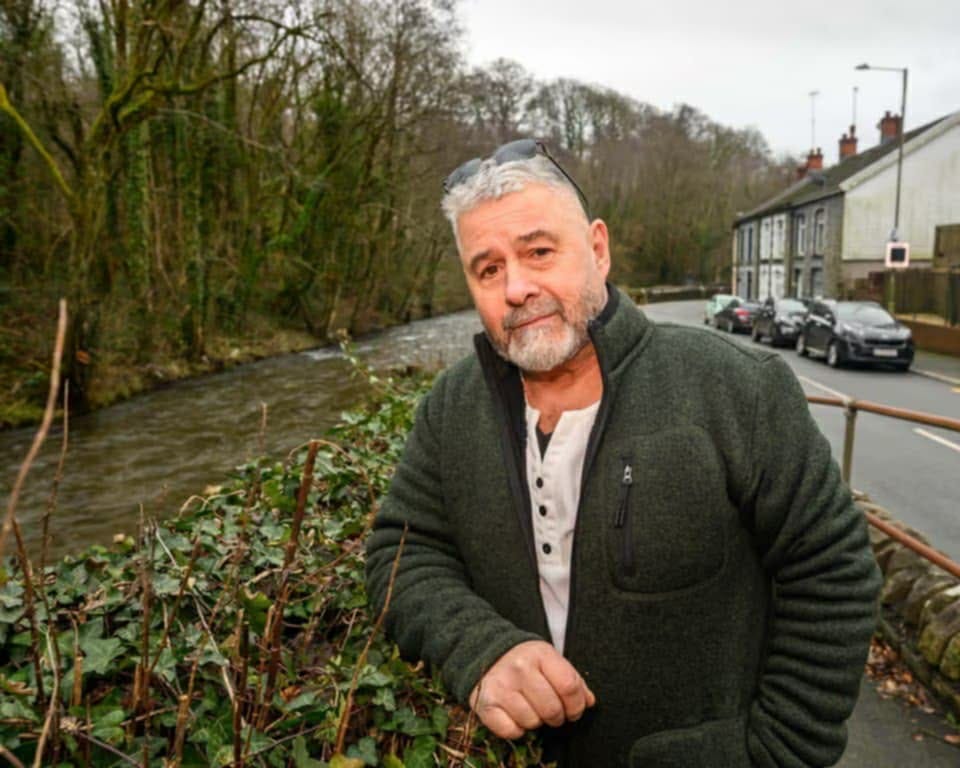
As Storm Dennis brought its heavy wind and rain, Paul watched as water crept up the wall above the river, spilling over into the street.
The reason the water spilled over this time, and hadn’t in previous decades, is most likely cause by the shifting weather patterns intensifying wind-rain extremes in the UK.
It’s been reported that a cubic metre of water weighs about 1 tonne, or roughly as much as a small car. It is estimated that at Dennis’s peak, the Taff, which Nant Clydach flows into, carried 805 cubic metres a second – enough to fill an Olympic size swimming pool in just over three seconds.
Add in the fact that these stone houses were built on a natural floodplain, on a very narrow street which functions as a basin, and you’ve got a recipe for disaster when a storm like Dennis (one of the most intense extratropical cyclones ever recorded) hits.
“The first house to get water was number seven,” Paul remembered. “It is a disabled elderly couple who live there. I came in to help when I saw water going in and their electric had been knocked off because their electric sockets were on the skirting boards. They were trying to get upstairs away from the water, but their stair lift wasn’t working without electricity. I had to stand behind each of them, hoisting them up the stairs.”
Paul instructed the couple to stay upstairs while he went and saw to his family. One of his daughters lived on her own just a few doors down from Paul. In Paul’s house was wife and grandson. Paul also had bought one of the houses on the street to renovate for another one of his children to live in.
“I couldn’t stop the water from coming into the properties,” he said. “I tried, but it just kept coming in under the door and up through the toilets. I told my one daughter, who is disabled and lives on her own, that I couldn’t do anymore, that she just had to get upstairs. That was terrible leaving her like that, but I had no choice. I had to get to my own house, where my wife and grandson were, to help them.”
For as long as he was able, Paul held a sheet against the outside of his front door, desperate to keep the water at bay. He could see water was coming in not only at the front of the house, but from the back door too.
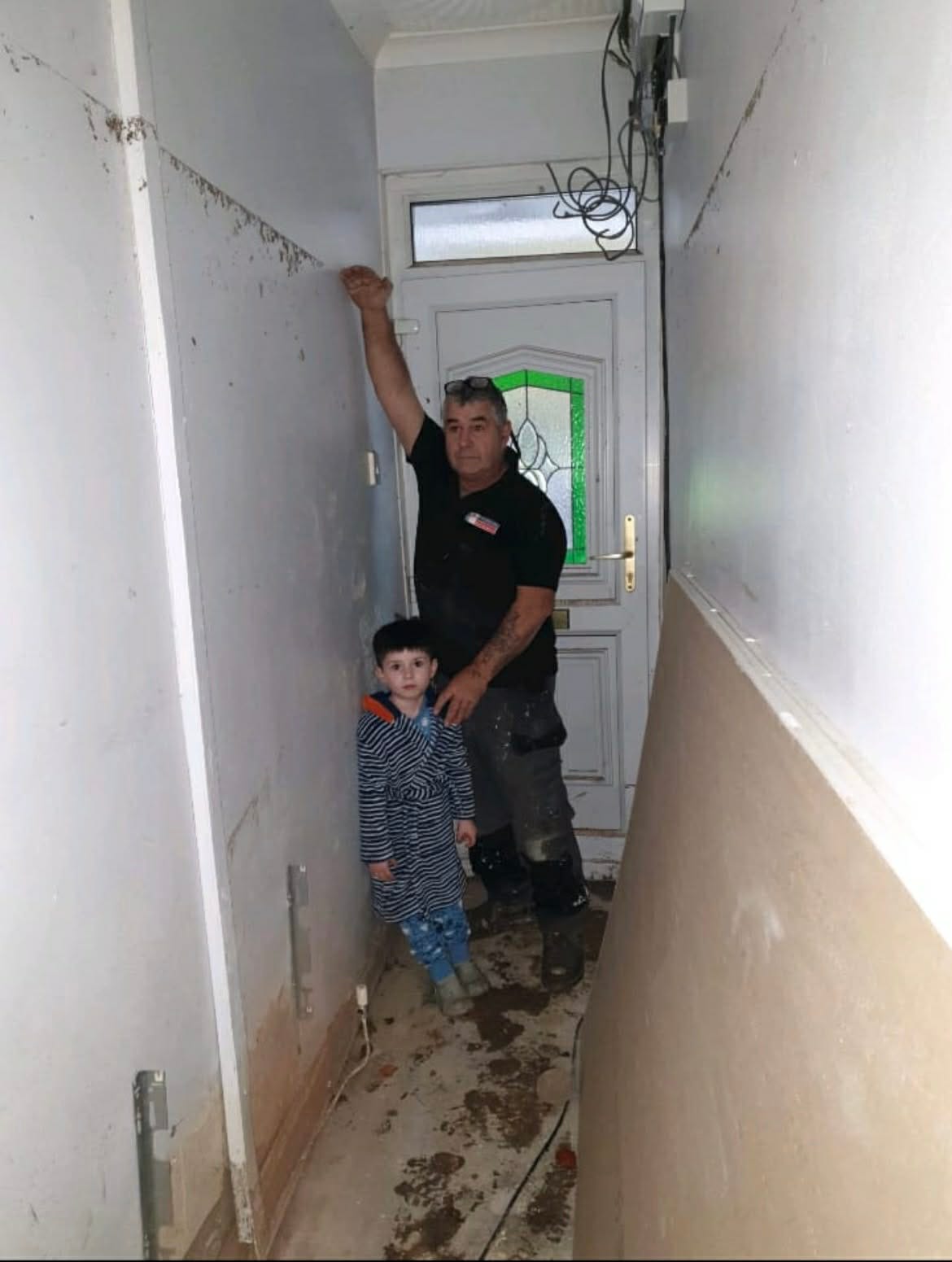
The water had crept up to his chest as he held the sheet against the door, before a wave of water came up the street and knocked him off of his feet, carrying him along to the wall.
“If my feet hadn’t hit the wall for me to kick against it, I would have gone over the wall and into the river, and been dragged down through the 160-foot-long tunnel,” he said.
He grabbed on to anything and everything to stop from being dragged away by the water.
During a brief lull in the storm, Paul floated through the street on a piece of Celotex (solid foam) checking on his neighbours through their upstairs bedroom windows.
Sixteen of the homes had their entire first floors flooded to the ceilings, according to Paul.
And then more waves came, and Paul “punched his way through the back door of his house” to save himself being dragged away by the river.
Paul and all the neighbours still have nightmares of that night in February 2026.
“We’ve all been diagnosed with PTSD,” he said. “It was such a terrible night. We can’t talk about it without getting emotional.”
The aftermath of the flood was not only inconvenient, but expensive for everyone affected.
Paul only had house insurance for the house he and his wife lived in, and received about a £60,000 pay out from the damage done. The damage done to the other house had to be repaired out of his own pocket.
But the money doesn’t replace everything these families cherished – “all those memories were just gone, everything was gone.”
Since the flood, every single time it has rained, Paul and his neighbours feel like they are living on death row.
“It’s like we’ve had our death sentence,” he said. “And every time it rains, it’s like someone is walking up the passageway and you’re wondering if this will be your time to go. Unless you’ve been flooded like this, it’s a feeling you won’t know.”
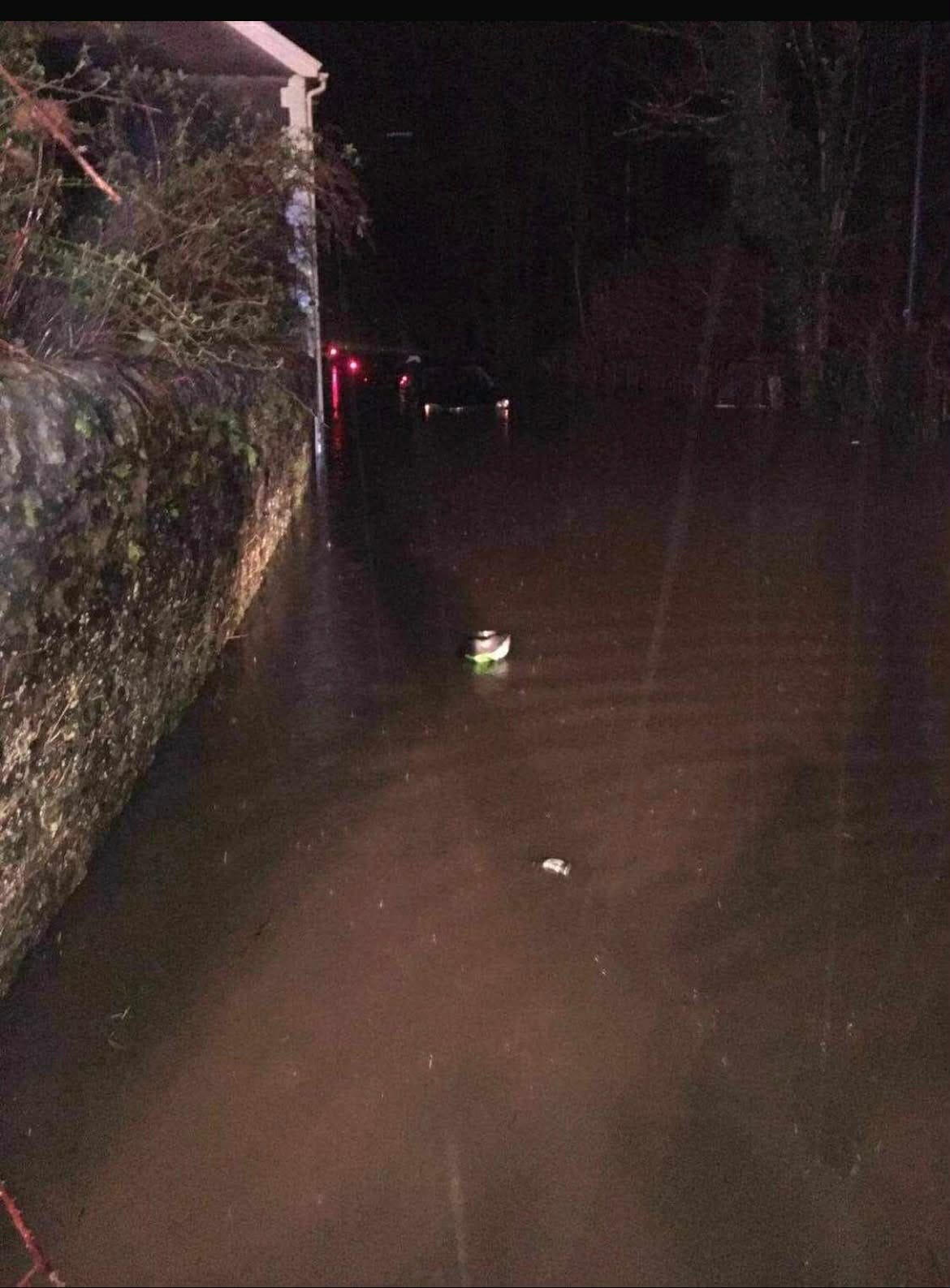
Paul tries to stay strong for his neighbours as everyone sees him as the father figure of the street, but even he stays awake all night if bad weather is due, frequently checking the river to see if it’s close to tipping point, worried that they’ll have a repeat.
When residents were consulted back in 2020 regarding what should be done to protect residents, Paul, a builder by trade, said the only affordable, viable option he could see what was for the council to buy the houses along the streets, and then demolish them.
Six years later, that is the decision which has been made after Natural Resources Wales’s assessment last summer found no viable option to minimising flood risk.
“With no other solutions able to be progressed, I am grateful that RCT Council has stepped up and taken the decision to acquire the threatened properties, so residents can relocate to live safely without the ever-present danger they are currently living in,” Vikki Howells, Labour MS for Cynon Valley, told The Valleys Lead.
Heledd Fychan, Plaid Cymru MS for South Wales Central told The Valleys Lead that while she is “pleased a solution has at last been agreed,” she also recognizes, that “leaving their homes will be difficult for some of the residents who have a lifetime of memories in these homes.”
“The fact that it has come to this – a buy out of a whole street because of the risk to life from flooding - should be a wakeup call for us all in terms of how climate change is impacting our communities,” Fychan continued. “The Welsh Government has been far too slow in responding, and we need a renewed focus and commitment on how best we support those who are at risk. No other community should suffer as Clydach Terrace has had to suffer.”
While Paul said, “the important fact is that we are moving,” he still feels sadness about the loss of his home and community.
“I won’t be able to live next door to my grandchildren anymore, or to my daughter who is disabled,” he said. “That split is going to be very difficult. I’m used to seeing my grandchildren every single day. All of that is lost now.”
Paul is now just playing the waiting game, hoping to hear what’s next to move forward with the sell of their houses.
“We need to be out by September, because that is when the worse weather hits us,” he said. “That’s only seven months away.”
Paul has been given a ballpark figure he’ll be given by RCT for his house, and he worries he won’t find a house of a similar size and condition, and in a similar area, at the price he’s been given.
Rhondda Cynon Taf Council have told The Valleys Lead that a purchase price of £2,300,000 has been agreed in principle. Additional relocation assistance and incidental and legal costs of circa £150,000 will be incurred. As final costs for incidental expenditure have not been finalised, the costs are likely to vary slightly from the above. Detailed costings have been provided for the individual property acquisitions.
“Officers have tried to strike a balance between enabling residents to acquire a similar standard of property, while not overcompensating the owners and occupiers, using Local Authority funding,” a spokesperson from Rhondda Cynon Taf Council said. “Officers will progress with the acquisition of the properties while continuing to work very closely with the local community, to fully-support the affected residents. We’d also like to thank residents at Clydach Terrace for their constructive engagement, in very difficult circumstances.”
One way or another, Paul is hoping none of the residents will be living in the street by September. “We just can’t,” he concluded.